

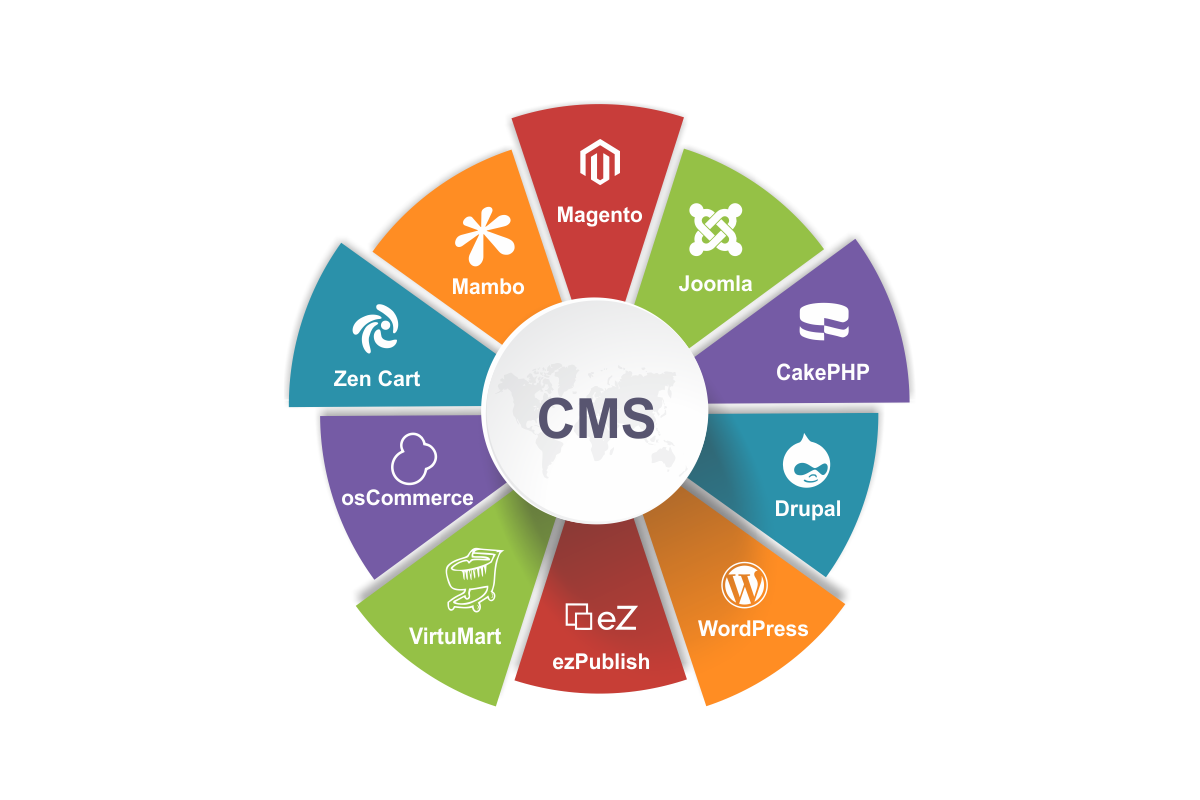
What is Content Management System (CMS)?
Content Management System (CMS) a technique for creating and editing the content digitally. CMS offers a wide variety of features and supports multiple users in a co-operative manner. Variant CMS incorporates indexing, history editing, web-based publishing, website authoring, search, format management, collaboration, and retrieval. It also includes administration tools that
an aid to an individual in gaining a bit of knowledge about markup and programming languages.
How to expand CMS dynamically?
CMS supports WYSIWYG(What You See What You Get) that offers the additional customization features to mold the website as per requirement. A good source of designing and updating the website with minimum effort. It is not necessary to be well-equipped with technical jargon. Anyone can get through it in the absence of a graphic designer and developer because it is as easy as clicking a button.
CMS is considered to be the self-hosted setup as it provides complete access to functionality and design.
Let’s go practical and follow the steps in building a website using CMS undergoes a few steps that easy and quick.
Web Hosting For CMS
The foremost requirement of website hosting, as files on the website that hosted can be fetched through the internet. Get your website hosted or dedicated server from host providers.
Few things to be considered in web hosting.
Hosting Uptime
The hosting should be operational to access the website on any server. The well-renowned web hosting providers offer an uptime guarantee, and the webserver seems to provide a guarantee of network uptime.
Customer Support
Using email an obsolete form of customer assistance as time quintessence. Live Chat and telephonic interaction the better and helpful substitutes for customer support.
Speed
Speed plays a drastically important role in SEO. Responsive and fast sites result in better ranking and boost colossal conversion rate.
Optimal domain name
The name should be optimum to the website offering and should hit the clear picture of the website. Pick the name giving a general idea about your business through plenty of registrars, and get on to the one resonating with your business.
Get a website using CMS without any hustle and bustle.
CMS is the ideal source of creating a website as one can create a customized website and build recent posts without any technical jargon and in a much easy way. There variant forms of CMS’s with their strengths and weakness.
Tools offered in CMS.
- One can share blogs and interact with users and a great source of offering information.
- Interactive Features
- Registration system to aid the user in accessing a complete site.
- It manages contacts, and for easy correspondence, we can create multiple forms.
- Link Management aids in organizing outbound links.
- Easy update and modification as per needs.
- SEO mechanism helps in enhancing the reachability of your website.
- Search tools help the user in finding items through the website using keywords.
Popular CMS available
WordPress
CMS type that a blogging platform and covers a vast market share of around 60%. It offers an interface, i.e., user-friendly, easily customizable, and available free of cost. It provides a wide choice of themes, plugins, and widgets that can be used as per requirement, making a blogging network. WordPress is fulfilling all the CMS requirements.
Magento
Magento, the form of CMS, is offered to satisfy e-commerce needs provided free of cost and highly recommended for small-scale businesses. Flexible and embedded with advanced features. Magento has the upper hand in parameters such as page loading speed, query processing time.
Joomla
The interactive and imaginative professional website is designed through Joomla and is the best choice in that. A massive amount of plugins, friendly URLs, better SEO rankings, navigation management, and many other features.
Opencart
The cheaper form of CMS and best suited for small and medium-sized websites. It is easy to maintain without any huge investment. It provides massive control over online stores along with multiple payment sources.
Drupal
The primary feature offered is SEO friendliness that ensures a high search ranking for your website. It is safe and sound open-source and involves many functionalities, graphics, advanced plugins, and many other features. The paths, URLs, and addresses set to offer effective CMS can create a fantastic blogging website and responsive website effortlessly.
Benefits of CMS
- Efficiency is improved while creating posts.
- Enhance the soundness of a website.
- Offers clean and attractive websites.
- Cost-effective in designing and implementation.
- Allow modified content and faster rate of publishing.
- Offer scalability as the website grows with your business.
- Save the cost of designing and implementation.
Conclusion
After seeking all the knowledge about CMS, let’s start with the best website platforms to meet all your website needs. Be its e-commerce store, a blog or a business website, each of this requirement can be satisfied with CMS.
WordPress is one of the best examples of the most popular and universal CMS platform, i.e., pretty much suitable for any website.
CMS manages both sales and content!! Start exploring top CMS platforms and get to know more about them. Be in touch, and we’ll guide you in every step towards your website success.